Types of Cricket Pitches and How They Affect Play

Here is something most new fans miss. Two sides can be evenly matched, the weather can be perfect, and the result still hinges on a 22-yard strip of soil that barely rates a mention on screen. Commentators drop lines like "there is a bit of grass on it today" or "this one will start turning by tea on day three", and if those phrases mean nothing to you, half the match passes you by.
The pitch runs the whole show. It decides whether the ball zips off the surface or sits up kindly to be hit, whether the quicks stay interested or the spinners take charge, and often whether a captain bats or bowls after winning the toss. Learn to read it and the sport makes far more sense. Here are the main types of pitch, how each one behaves, and why teams obsess over them.
First, what actually is a cricket pitch?
The pitch is the rectangular strip in the middle of the ground where the bowling and batting happen. It is rolled soil, usually with some grass on top, prepared by the ground staff over several days. How much they water it, how hard they roll it, and how much grass they leave all shape the way the ball behaves. No two are identical, and that variety is a big part of why cricket feels different from one ground to the next.
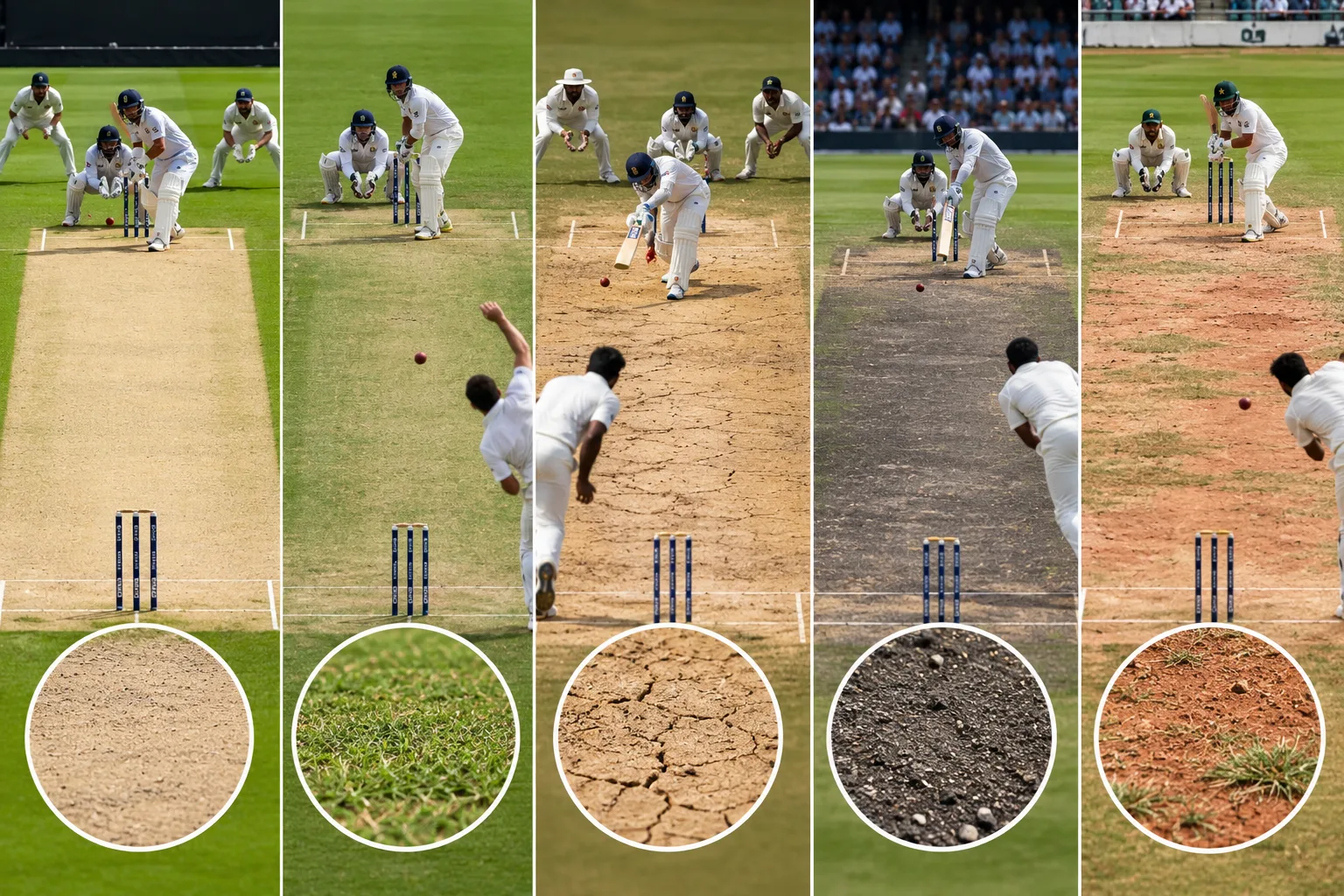
Green, seaming pitches
A green pitch is one left with a healthy covering of grass. That grass traps moisture and keeps the top firm, which suits fast bowlers. When the ball lands on the seam, the grass helps it dart sideways off the surface, this is called seam movement, and the ball can swing through the air too while it is still new.
England, New Zealand and parts of South Africa serve these up regularly, especially in the first hour of the morning. Batters have to be patient, leave the deliveries angling across them outside off stump, and wait for the shine to go. For more on why quicks relish these conditions, our piece on spin vs pace bowling lays out the contrast.
Dry, dusty, spinning tracks
At the opposite end is the dry pitch with little grass and a crumbly top. These turn up across the subcontinent, India very much included, and they get tougher as a match wears on. The surface breaks up, the ball starts to grip and spin, and the footmarks bowlers leave become rough patches a spinner can target.
When you hear "it will take turn", this is the pitch in question. The ball deviates off the surface after pitching, sometimes gently, sometimes sharply enough to beat everything. On a genuine turner, batting last is brutal, which is why you so often hear that a team "has to bat first here". Judging all this is a big slice of why captaincy matters, something we get into in our look at the role of a cricket captain.
Flat batting tracks, the famous "roads"
Then there is the flat pitch, fondly nicknamed a road or a featherbed. These are hard, even surfaces with true bounce and little on offer for anyone holding the ball. Deliveries come on at a steady height, the bounce stays predictable, and batters can trust their strokes.
Expect big totals, a steady stream of centuries, and a long shift for the bowlers. Discipline is rewarded here. A fielding side on a flat deck tends to build pressure, choke the runs and wait for an error rather than hope the surface helps.
How a pitch changes over a Test match
This is the part that makes Test cricket so layered. A pitch is not fixed. It is a living surface that ages across five days.
- Day one: often the freshest, with a hint of moisture and perhaps some early seam or bounce.
- Middle days: frequently the best time to bat, once the surface settles and the grass fades.
- Final days: wear sets in. Cracks open up, the top crumbles, and the ball can misbehave, keeping low, spinning, or spitting up without warning.
Those cracks count for a lot. When the ball clips the edge of one, it can shoot through low or shoot off sideways, which is why chasing a target on the last day is such hard work. The same strip that looked docile on day one can turn treacherous by the close.
What the grass cover tells you
A glance at the grass gives you a head start. A lush green tinge usually points to seam and pace early on. A bare, brown, dusty look hints at spin, especially as the game stretches out. Seasoned watchers, and captains, read these signs long before a ball is bowled.
Reading the pitch: the toss and team selection
All of this feeds two big calls. The first is the toss. If the surface looks like it will fall apart, a captain usually bats first to avoid batting last on a broken pitch. If there is early moisture and heavy cloud, bowling first starts to look tempting.
The second is team selection. On a green seamer a side might add an extra quick. On a dry turner they stack up on spinners. Get this reading wrong and a match can slip away before it starts, which is why teams study the pitch so closely in the days before play.
If you like keeping fixtures and live scores in one place while all this plays out, setting up a cricket id keeps it simple to follow along.
Closing thoughts
Next time you tune in, give the pitch thirty seconds before the first ball. Green or bare? Flat or already cracking? That small habit changes how you watch, because you start to sense what the ball might do and why the captain made the call he did. The strip in the middle is telling a story the whole time, and now you can follow it.