DLS Method Explained: How Rain Decides a Match

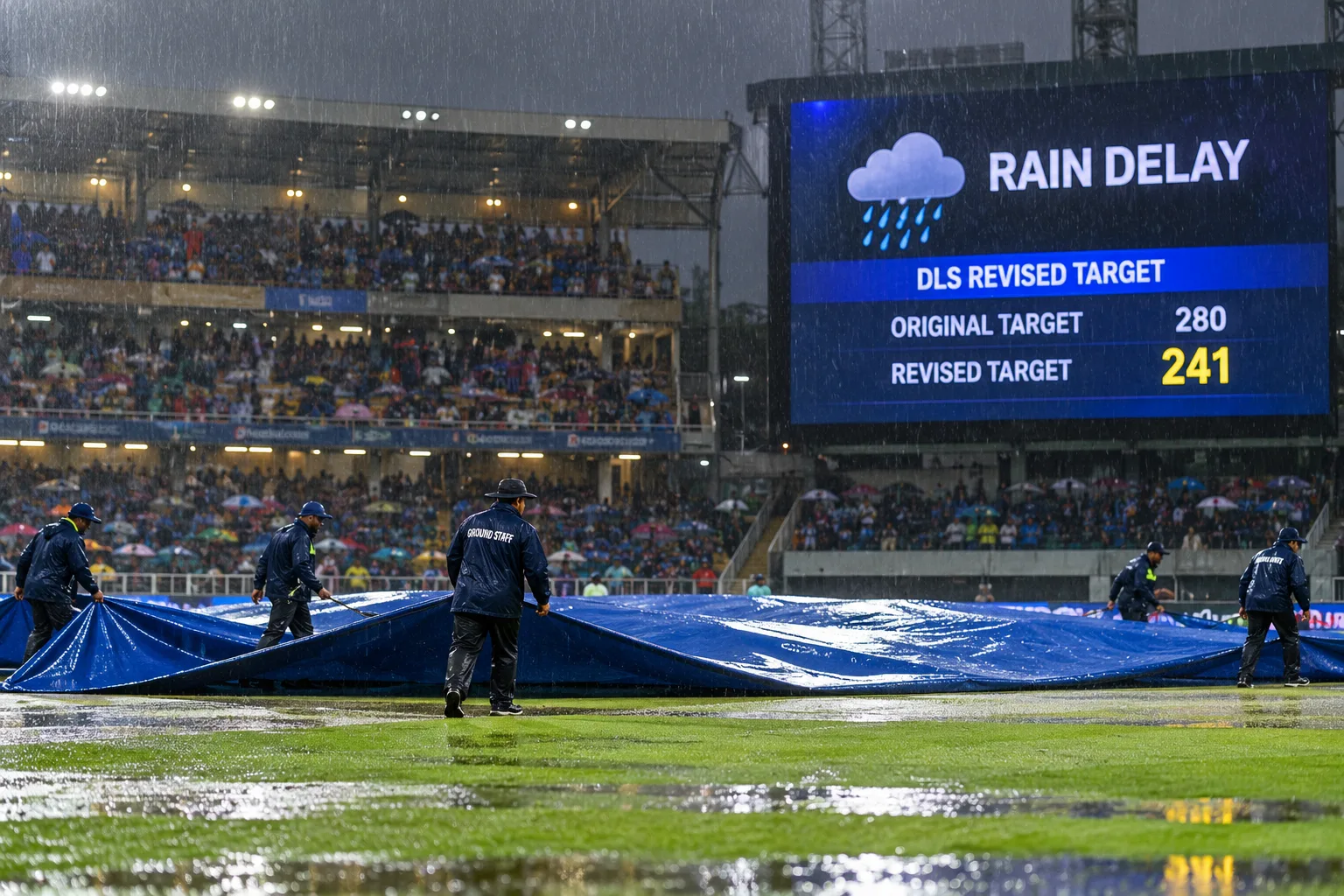
You have seen it a hundred times. The clouds roll in over the ground, the covers come on, and the match goes quiet for an hour. When play finally restarts, the chasing side suddenly needs a completely different number of runs, and the commentators start saying things like "they are twelve ahead of par." If that moment has ever left you squinting at the screen wondering who changed the maths, you are in good company.
The system behind that revised number is the DLS method, short for Duckworth-Lewis-Stern. It sounds intimidating, but the core idea is fair and genuinely simple once you stop worrying about the formula and start thinking about what a team still has left to play with. So here is the plain-English version.
Why a rain-hit match needs a new target at all
Limited-overs cricket is a contest with two currencies: the overs you still have to bat, and the wickets you still have in hand. A side batting second plans its whole innings around both. Lose a big chunk of overs to rain, and simply chasing the original total becomes unfair, because the team now has far less time but the same number of runs to get.
Imagine a side needing 280 off 50 overs. Rain cuts the chase to 25 overs. Asking for 280 off half the deliveries would be brutal; just halving it to 140 would be far too easy, because the chasing team still has all ten wickets and can swing freely. DLS exists to find the honest middle ground between those two extremes.
The big idea: resources
Everything in DLS hangs on one word: resources. At the start of a 50-over innings, a team holds 100 percent of its resources, which is a blend of overs remaining and wickets in hand. As the innings rolls on, that percentage ticks down. Every over bowled uses a little. Every wicket that falls uses a lot.
And this is the part people miss. Wickets and overs are not weighted equally, and they do not drain in a straight line. A team that is 20 for 1 after ten overs has barely spent anything, because it still has nine wickets and loads of time. A team that is 20 for 6 has burned through most of its batting resource, even though it has used the same ten overs. DLS reads the match through this lens of what you have left, not just the raw score.
Why wickets matter so much
Think of wickets as fuel. With plenty in the tank, a batting side can attack and take risks. Once the tail is exposed, caution creeps in and scoring slows. DLS mirrors the way the game actually behaves, which is why losing early wickets hurts a chasing team's revised equation far more than a quiet few overs would.
Par score and the "ahead or behind" talk
During a chase, the broadcast often flashes a par score. This is simply where the chasing team should be, right now, for this exact over and wicket situation, to be level with the first innings on resources. If the batting side is above par, they are on course. If they are below, they are behind and need to lift.
So when you hear a team is "fifteen runs ahead of DLS par" as rain arrives, it means that if the match were called off at that instant, they would be declared the winners. It is a running snapshot, not the final target, and it can swing fast if a couple of wickets tumble.
How the revised target is set
When overs are lost, DLS compares the resources available to each team and adjusts the chasing side's goal to match. The logic runs roughly like this:
- If the team batting second has fewer resources than the first side had, the target is scaled down.
- If, oddly, the second side ends up with more resources, for example when the first innings was cut short unexpectedly, the target can be revised upward, above the original score.
- The final figure always lands on a run, and the team has to pass it, not just equal it, to win.
Importantly, DLS does not conjure a formula on the spot. It draws on a large reference table of typical scoring patterns, refined over years of real matches, so the revised number reflects how teams genuinely score from any given position.
Where DLS fits in the formats
You will meet DLS in ODIs and T20s, the limited-overs formats of cricket where overs are capped and rain can wreck the balance. Test cricket does not use it, since there is no fixed over target to protect. A minimum number of overs usually has to be bowled in the second innings for a DLS result to stand, which is why some washed-out games finish with no result at all rather than a revised verdict.
If you like to track the par score ticking over ball by ball, keeping every fixture and live score in one place makes it far easier to follow, which is where a cricket id comes in handy once the weather turns and the numbers start moving. To spot where the par figure actually sits on screen, it also helps to know how to read a cricket scorecard.
Putting it all together
You do not need the equations to follow DLS. Remember that a side spends two things as it bats, overs and wickets, and that the method simply keeps the contest fair when rain steals some of those overs. Par is the halfway marker telling you who is winning right now, and the revised target is the honest number the chasing team must beat. Next time the covers come on, you will be the one in the room explaining why the score just changed, calmly and correctly.