Famous Cricket Stadiums in India Every Fan Should Know
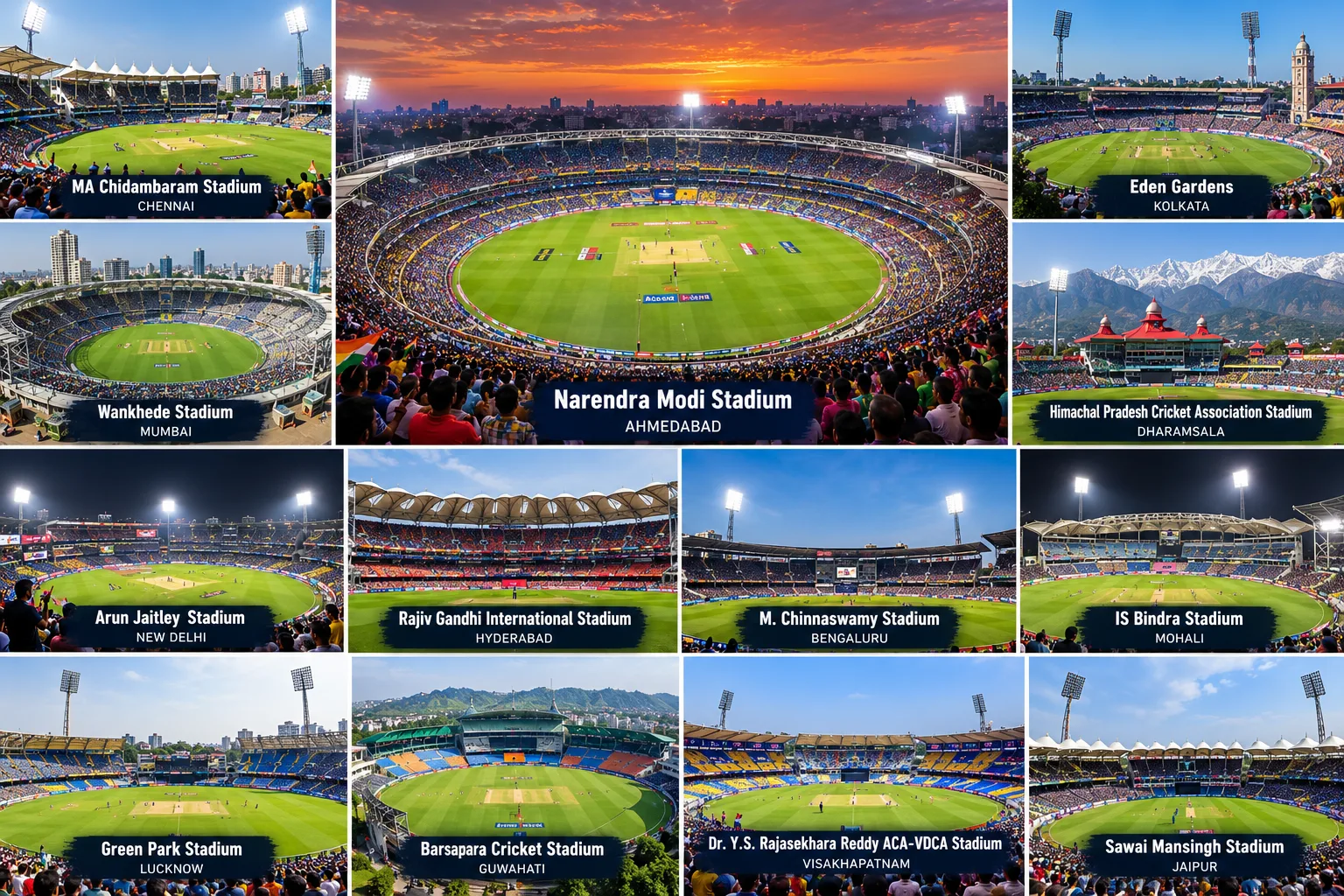
Every Indian cricket fan carries a map of the country drawn in stadiums rather than state lines. Say "Eden Gardens" and a particular roar starts up in your head. Say "Wankhede" and you can almost taste the salt coming off the Arabian Sea. These grounds are not just places where matches happen. They have moods and memories and famous nights, and once you know a few of their stories you watch the cricket a little differently.
Here is a short tour of the grounds worth knowing, what gives each one its character, and the single moment that turned it into something fans still argue about over chai. A few are gleaming modern bowls that could hold a small town. Others are older and a bit weathered. All of them have handed us something hard to forget.
Eden Gardens, Kolkata
If Indian cricket has a spiritual home, plenty of people will send you straight to Eden Gardens. It is one of the oldest and largest grounds in the country, and on a packed night the sound does not arrive in waves so much as press down on you from every side. Kolkata crowds know their cricket and will applaud a fine stroke from the opposition as warmly as one from their own.
The moment that defines it is the 2001 Test against Australia. VVS Laxman and Rahul Dravid batted almost the whole of a day after India had been asked to follow on, and India went on to win a match it had already half lost. Laxman's 281 is still mentioned here in a lower voice than usual, the way people talk about something slightly miraculous.
Wankhede Stadium, Mumbai
The Wankhede sits close enough to the sea that an evening game picks up a breeze off the water, and for decades it has been the pulse of Mumbai cricket. It is tight, steep and loud, the kind of ground where the front rows feel close enough to field.
There is only one place to begin. On 2 April 2011, India won the fifty-over World Cup final here, and MS Dhoni ended the chase with a six that a whole generation can replay from memory. The sight of the team carrying Sachin Tendulkar around the field on their shoulders, in his own city, is one of the images Indian cricket keeps closest. If you want to see how that night sits in the larger story, our look at World Cup history and its champions fills in the rest.
Narendra Modi Stadium, Ahmedabad
Rebuilt and reopened in 2021 in the Motera area of Ahmedabad, this is the largest cricket stadium in the world, holding somewhere around 132,000 people. Walking in the first time is a strange experience. The stands seem to curl away without end, and a full house makes a noise you feel in your ribs before you quite hear it.
Its biggest occasion so far was the final of the 2023 ODI World Cup, played in front of a record home crowd. The result did not fall India's way that evening, but the sheer size of the night marked the ground out as the country's new showpiece.
M. A. Chidambaram Stadium (Chepauk), Chennai
Chepauk is cricket from an older school. The pitch usually gives the spinners something, the afternoons are humid and slow to forgive, and the Chennai crowd has long had a name as the most sporting in the country. This is the ground where supporters once stood to applaud a visiting side that had just beaten India, simply because the cricket earned it.
Its most famous afternoon belongs to the 1986 tied Test against Australia, only the second tie in the long history of the format. Very few grounds anywhere can point to a finish that rare. Chepauk asks for patience, from the players on the field and the people watching alike.
M. Chinnaswamy Stadium, Bengaluru
Set right in the heart of the city, the Chinnaswamy is a batter's kind of ground. Short square boundaries and a fast outfield send totals climbing quickly, and a full Bengaluru house on a league night is among the loudest you will meet. It has long been the home of Royal Challengers Bengaluru and has seen some outrageous hitting down the years.
Because big scores feel almost ordinary here, it is a fine place to notice how far batting has travelled. If that part of the game interests you, our piece on the Ranji Trophy shows how grounds like this quietly bring through the next set of players long before the floodlights find them.
Arun Jaitley Stadium (Feroz Shah Kotla), Delhi
One of India's oldest international venues, the Delhi ground once known as Feroz Shah Kotla has history worked into every corner. It has watched wave after wave of Delhi cricketers come through, and its pitch has often rewarded bowlers willing to graft for their wickets.
Its most astonishing moment arrived in 1999, when Anil Kumble took all ten wickets in an innings against Pakistan, one of only a couple of times that has happened in the whole of Test cricket. People who were in the stands still describe the knot in their stomachs as those last wickets fell.
Keeping track through a busy season
Working out which ground is hosting which fixture, and following the scores when the matches come thick and fast, can get genuinely confusing. If you like having every fixture and live score in one place, setting up a cricket id makes it easy to see where the next big match is being played.
One last thought
These grounds are far more than concrete and floodlights. Eden Gardens gave us a comeback nobody saw coming, the Wankhede gave us a World Cup, Chepauk gave us a tie, and Delhi gave us ten wickets to one man. Next time a match begins, take a second to notice where it is being played, because a good half of the drama of Indian cricket is written into the stadiums themselves. Pick a ground, learn what happened there, and you will never watch a game at it quite the same way again.