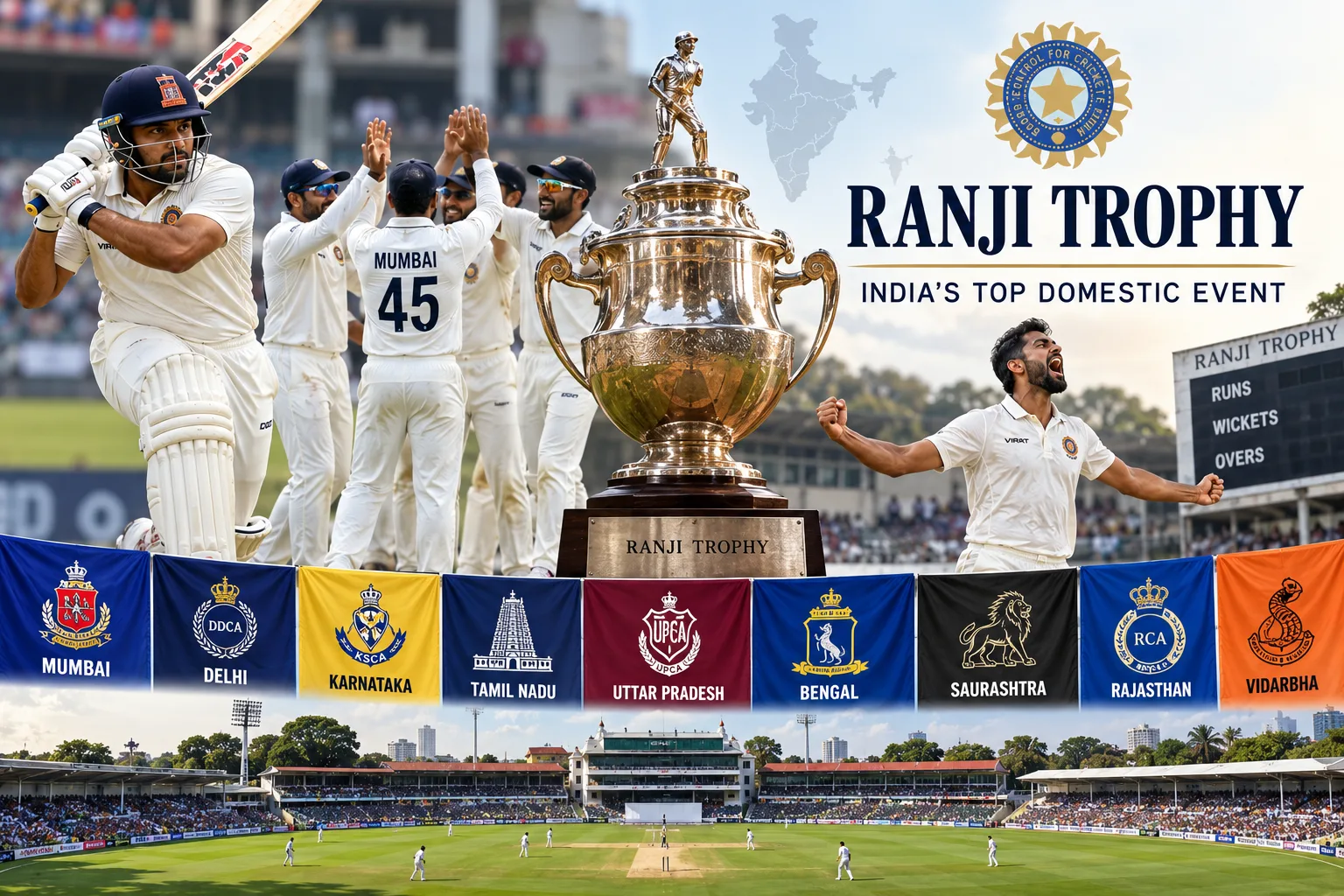
What is the Ranji Trophy? India's Top Domestic Event
Every time a young batter walks out for India and looks completely at home against swing or sharp turn, there is usually a long, unglamorous backstory behind that calm. More often than not, it runs through four-day matches played on quiet mornings in front of small crowds, with the player grinding out runs session after session. That backstory has a name, and for Indian cricket it is almost sacred: the Ranji Trophy.
It does not get the floodlit drama or the constant social media buzz that shorter cricket enjoys. Yet ask most Indian internationals where they truly learned the game, and they will point straight back to it. So here is the plain version of what the Ranji Trophy actually is, how it works, and why it still matters so much to anyone who loves the longer version of the sport.
India's oldest first-class competition
The Ranji Trophy is India's premier domestic first-class tournament, contested between teams that represent states and a few other regions. It has been running since the 1930s, which makes it one of the oldest organised cricket competitions in the country. The trophy is named in honour of Ranjitsinhji, the celebrated batsman whose elegant strokeplay made him a legend in his era.
"First-class" simply means matches played over multiple days with two innings per side, the same traditional format as Test cricket. These are not quick, flashy games. They reward patience, concentration and the ability to stay switched on for hours. If you want a clearer picture of how the longer game sits alongside the shorter versions, this breakdown of the three formats of cricket puts it in context nicely.
Who plays, and how it is set up
The competition brings together teams from across India. Big cricketing states like Mumbai, Karnataka, Tamil Nadu, Delhi and Bengal have long, proud histories here, while smaller and newer sides have steadily joined over the years as the game spread into every corner of the country.
In broad terms, the tournament is organised in two stages:
- Group stage: teams are split into groups and play a series of league matches to earn points.
- Knockouts: the top performers move into quarter-finals, semi-finals and finally the title match, where the champion is decided.
The exact group structure and number of teams have changed through the decades as the board has reshaped the competition, so the finer details vary season to season. The core idea, though, has stayed the same: play well across a long league grind, then prove yourself in the pressure of the knockouts.
Why it is such a tough examination
What makes the Ranji Trophy special is how honestly it tests a cricketer. Over four days, there is nowhere to hide. A batter who nicks off cheaply on a seaming morning gets a second innings to think it over and do better. A bowler who leaks runs still has to come back and find a way through on a flat, tiring surface.
Conditions swing wildly depending on where you play. A greentop on the coast behaves nothing like a dry, dusty track that starts gripping from day two. Learning to score runs and take wickets across that range is exactly the kind of all-round skill that Test cricket demands. If pitch behaviour fascinates you, this guide to the different types of cricket pitches explains why the same batter can look like a different player from one venue to the next.
The pathway to the India team
This is the heart of why the Ranji Trophy matters. It is the main ladder a domestic player climbs on the way to the national side. Selectors watch it closely, and a heavy run of scores or a bagful of wickets over a season is one of the most reliable ways to force your way into the conversation.
Plenty of India's finest built their reputations here before the whole country knew their names. The tournament teaches the habits that survive at the top level:
- Building long innings rather than chasing quick, risky runs.
- Bowling tight, probing spells and staying patient for a breakthrough.
- Reading conditions and adjusting a game plan on the move.
Even established internationals sometimes return to play a Ranji match to rediscover their rhythm or work their way back from injury, which tells you how much respect the competition commands inside the dressing room.
Following the action
Because so many matches happen at the same time across the country, it is easy to lose track of who is doing what. Scorecards update through the day, and a strong individual performance in a far-off group game can quietly reshape the selection picture. If you like keeping every fixture and live score in one place, a cricket id makes following along simple, without hopping between a dozen tabs.
Once you start watching with the context of the pathway in mind, the whole thing becomes far more rewarding. You begin spotting the next prospect before the headlines catch up, and you understand why a gritty, unbeaten hundred on a difficult pitch can matter just as much as a flashy knock under lights.
The bottom line
The Ranji Trophy is not the loudest competition in Indian cricket, but it is arguably the most important one for the long-term health of the game. It is where technique is forged, temperament is tested, and the players who eventually carry the nation's hopes first learn how to compete. Give it a little of your attention, and you will never look at a composed Test debut the same way again.