What Is a Super Over and How Does It Break a Tie?

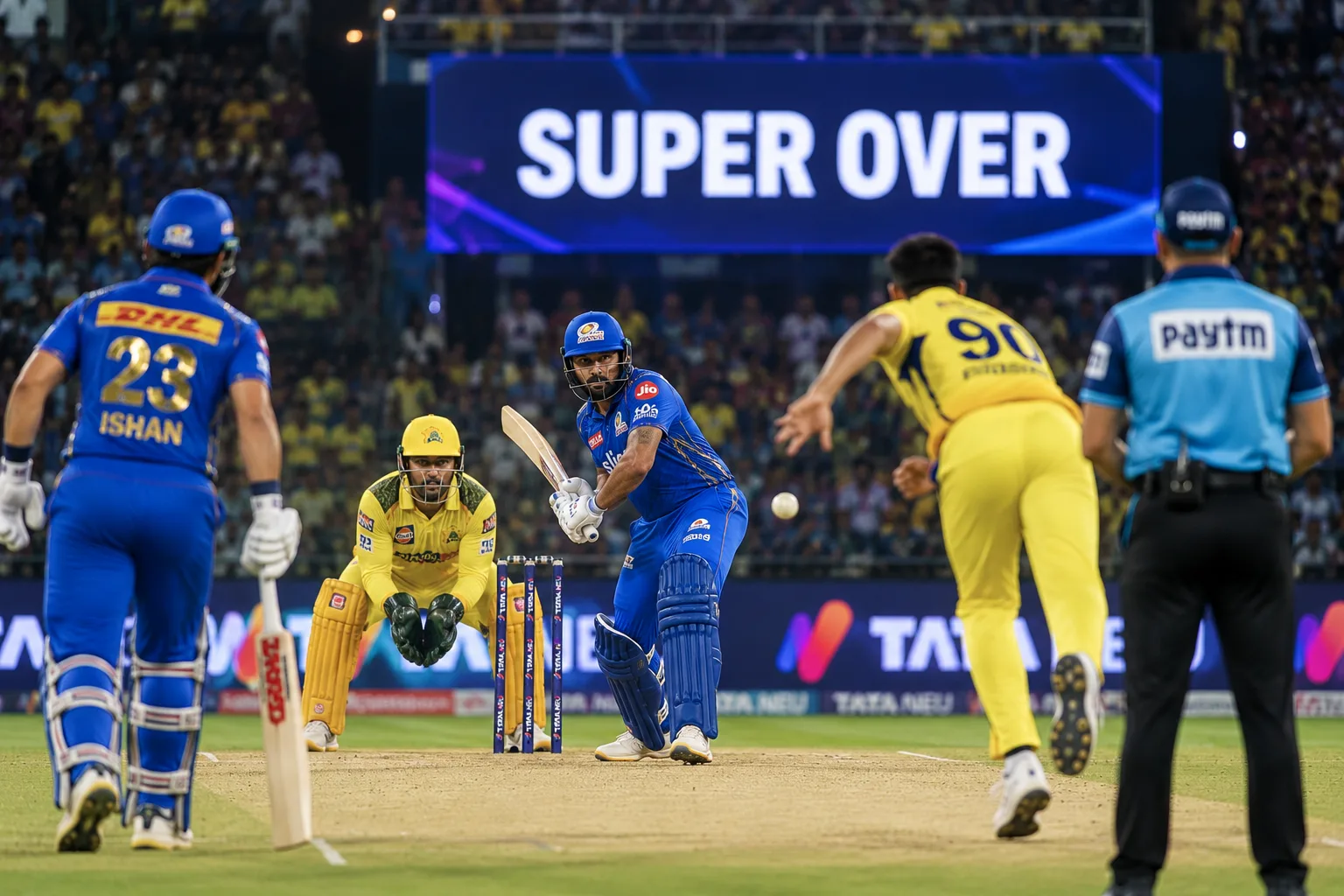
Two teams have battled for three hours, the scores are level, and the match has nowhere left to go. For most of cricket's history a tie simply stayed a tie, or got settled by something as awkward as a bowl-out. Then the game found a cleaner answer: give each side one more over and let them settle it with the bat. That is the Super Over, and it has produced some of the most nerve-jangling finishes limited-overs cricket has seen.
If you have watched a last-ball finish and wondered how a single over can decide a whole game, this guide walks through it. We will cover what a Super Over is, when it gets used, the rules behind it, and the question that keeps fans on edge: what happens if the Super Over itself ends level.
So what exactly is a Super Over?
A Super Over is a one-over eliminator used to break a tie in limited-overs cricket, most often in T20s but also in knockout one-day games. Each team bats a single over of six legal deliveries, and whoever scores more in that over wins the match. It arrived in the late 2000s to replace the bowl-out, which many felt was a clumsy way to finish a real contest. The logic is simple and fair: you tied with the bat, so you settle it with the bat.
It only comes into play when both innings finish on exactly the same total after all the overs have been bowled. In an ordinary league fixture a tie might just be shared between the two sides, but in tournaments and knockout matches the Super Over steps in to produce a clear winner.
When is a Super Over actually used?
You will not see one in every tied game. It depends on the rules of the competition. In general it is triggered when:
- The match finishes tied after both teams have completed their innings.
- The competition's playing conditions demand an outright result, such as in a final, a semi-final or a decisive league game.
- Conditions still allow play, since weather or time can get in the way.
It helps to separate a tie from a rain-affected result. When rain shortens a game, officials reach for a different tool, which you can read about in our explainer on the DLS method. A Super Over is only about a level scoreline, not a washed-out one.
How a Super Over works, step by step
The format is tight and the margins are tiny, which is exactly why it grips you. Here is how it unfolds.
Each team gets one over
Both sides bat one over of six legal balls. Usually the team that batted second in the main match bats first in the Super Over, and the over is bowled from the same end. The side batting second then knows the precise target it needs, which piles on the pressure.
Three batters, two wickets
A team names three batters for its Super Over, and that is the twist. The innings ends either when the over is complete or when the side loses its second wicket, whichever comes first. In practice you can afford to lose only two wickets, so there is no room for a reckless slog that collapses. Choosing the right three becomes a real tactical decision.
One bowler, familiar restrictions
Each side also names a single bowler to deliver its over, and the usual fielding restrictions of the format apply. Captains often turn to a death-overs specialist or a composed spinner rather than their quickest bowler, because nerve counts for as much as pace here.
If you like keeping every live score and fixture in one place while you follow these finishes, setting up a cricket id makes it simpler to track. Reading the scoreboard helps too, and our guide on how to read a cricket scorecard is a useful companion.
What if the Super Over also ties?
This is where it gets dramatic. For a while a tied Super Over was decided by a boundary countback, meaning the team that had hit more boundaries across the match and the Super Over was named the winner. That rule drew plenty of criticism, and it was later scrapped.
The current approach is far more satisfying: if the Super Over is tied, you simply play another one. If that ties too, you keep going until a team finishes ahead. It takes away the sense of a match being decided by a technicality and hands the result back to the players.
Why the Super Over creates so much drama
A full T20 innings has 120 balls to iron out mistakes. A Super Over has six. Every delivery can swing the result, a dropped catch feels enormous, and one clean hit over the ropes can change everything. Bowlers who stay calm become heroes, and batters who find the gaps under that pressure earn stories that get retold for years.
There is a mental contest too. The side batting first wants a total that feels just out of reach, while the chasing side has clarity but also the weight of a fixed target. Captains back their best three batters and their steadiest bowler, knowing there is no second chance inside the over. It is cricket stripped back to its tensest form.
The short version
A Super Over is cricket's neat answer to a tie: one over each, three batters, two wickets, most runs wins. If it ties again, you play another until there is a winner. It rewards nerve, smart selection and clear thinking under pressure, and it tends to deliver the kind of finish fans talk about long after the floodlights go off. The next time a match ends level, you will know exactly why everyone leans forward in their seats.