What is DRS in Cricket? The Review System Explained

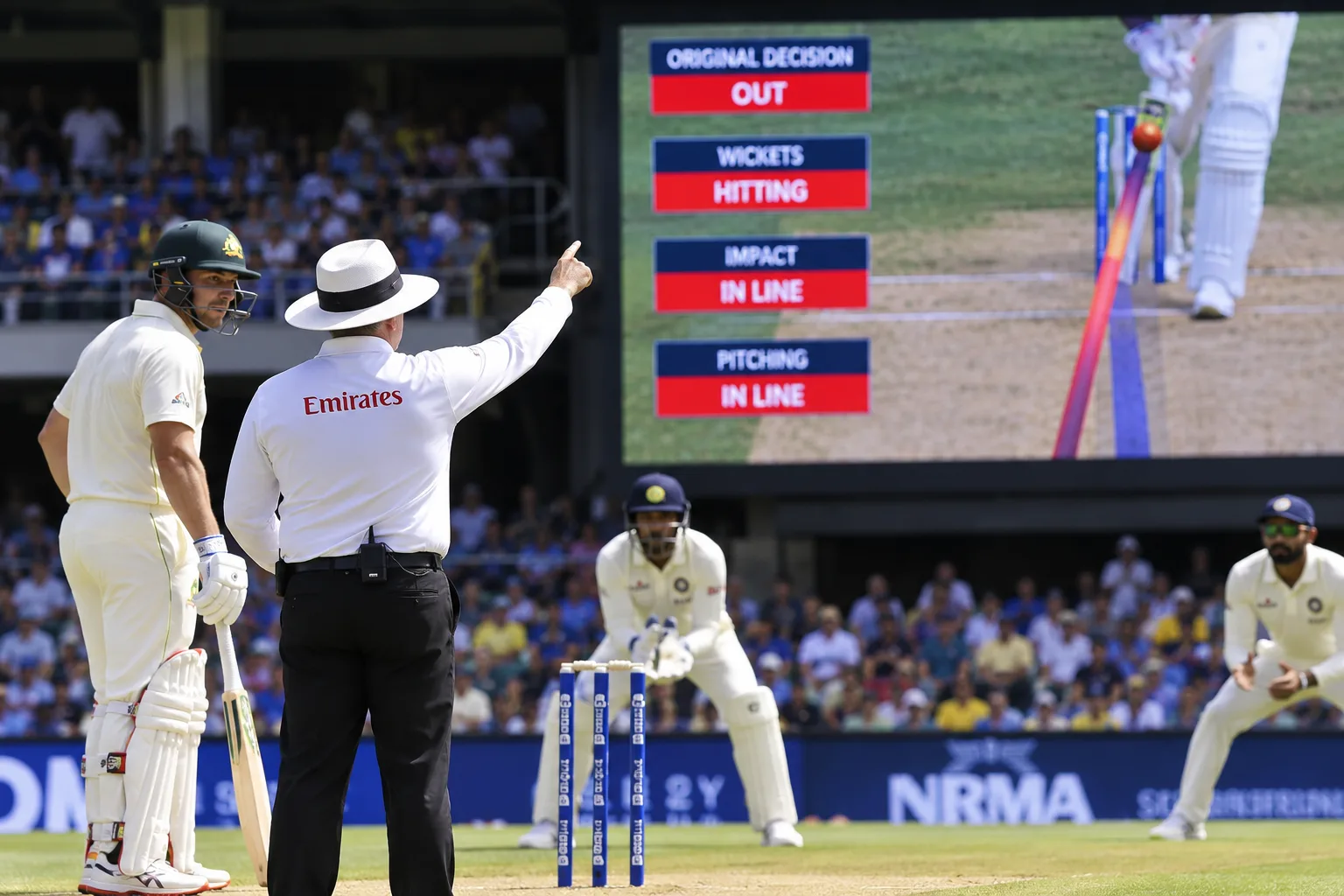
Picture a tense afternoon session. The bowler slams one into the pads, the whole fielding side goes up in a roar, and the umpire slowly lifts his finger. The batter freezes, glances down the pitch at his partner, taps his helmet, then draws a quick T-shape with his hands. In a heartbeat everyone has stopped watching the middle and turned to the big screen. That little T is the moment the Decision Review System, or DRS, takes over.
For a lot of fans, DRS is the part of the game that feels half science lab, half courtroom. Lines flash red and green, a ball crawls along in slow motion, a strange crackle jumps on a sound graph, and then a decision is either backed or thrown out. It looks fiddly, but the idea behind it is plain: give players a fair way to question an umpire's call when they are convinced something went wrong. Here is how the pieces fit.
So what does DRS actually mean?
DRS stands for the Decision Review System. It is a bundle of cameras, microphones and set procedures that lets the players, through the on-field umpires, send a decision upstairs to a third umpire sitting in a room full of screens. Before DRS existed, whatever the umpire said was final, honest mistakes included. Now a side gets a small number of chances to ask, politely, whether the umpire is sure.
The word that matters here is limited. A team cannot challenge every ball that goes against it. That cap is there on purpose. It keeps the umpires in charge of the match and stops the game stalling every few overs, so captains and batters have to spend their reviews with some care.
How a player takes a review
Only two parties can start a review. The fielding side can question a not out decision, and the batter who has just been given out can question that dismissal. A fielder standing elsewhere cannot ask on a batter's behalf, and the non-striker cannot overrule his partner at the other end.
Once the umpire makes the call, the player has a short window, usually around 15 seconds, to make the T-sign with both arms. The whole point is a quick, instinctive judgement. If the two batters are caught in a long chat clearly meant to run down the clock, the umpires can simply wave the review away. Knowing when to use a review and when to hold onto it is one of the quieter burdens a skipper carries.
The technology doing the heavy lifting
Once the third umpire takes charge, a handful of tools come into play. Here is what each one is really doing.
- Ball-tracking (Hawk-Eye and similar systems): Several cameras follow the ball and build a 3D picture of where it pitched, where it struck the pad, and where it was heading next. This is the backbone of almost every lbw review.
- Edge detection (UltraEdge or Snickometer): A sensitive stump microphone picks up the faint sound of ball brushing bat or pad and shows it as a spike on a sound wave, lined up against the slow-motion footage.
- Hot Spot: Infra-red cameras reveal a small bright mark wherever the ball makes contact, because the friction gives off a little heat. It is handy for confirming a thin edge.
For a caught-behind appeal, the third umpire usually leans on the edge sound and the replays. For an lbw, it is mostly ball-tracking, often cross-checked with the edge tech to be sure the ball struck pad and not bat first.
Understanding "umpire's call"
On an lbw review, this part stirs the loudest arguments. The ball-tracking has to settle three questions: did the ball pitch in line, did it strike the pad in line, and was it going on to hit the stumps? For that last question, a margin is built in. If the ball is only shaving the stumps, the technology is not treated as pinpoint-perfect.
So when the replay shows the ball barely kissing the bails, the verdict comes back as umpire's call. In plain words, the original on-field decision stands, whatever it happened to be. Two near-identical deliveries can end up going opposite ways purely because one umpire first said out and the other said not out. Maddening, maybe, but it exists to respect the human in the middle when the margins are this thin.
How many reviews does a team get?
The exact number has been adjusted over the years and can vary by format and tournament. As a rough rule, each side gets a set number of unsuccessful reviews per innings in Tests, with a slightly different allowance in the shorter white-ball games. If a review succeeds, or the outcome is umpire's call, a team usually keeps it; if the challenge fails outright, that review is spent. These small differences in how reviews are handed out are one of the quieter contrasts between the formats of cricket.
What can and cannot be reviewed
DRS is only for certain dismissal-related decisions, not every single thing that happens on the field.
- Usually reviewable: lbw, caught behind and other catches, whether a low catch carried, bat-pad decisions, and similar out or not-out calls.
- Not a DRS matter: a captain cannot review a wide, and general field-umpiring judgements outside a dismissal are not open to a player review.
Separately, a few decisions such as line calls for run-outs, stumpings and front-foot no-balls are checked by the third umpire as routine, without a team having to spend a review at all.
Why DRS matters
Strip it back and DRS is simply a fairness tool. It will not catch every error, and umpire's call will keep splitting opinion for years yet, but it has quietly made the game more honest than it was. The next time a batter flashes that T-sign, you will know the exact chain of cameras, microphones and fine margins that is about to kick in. If you like keeping fixtures and live scores in one tidy place while you watch these moments unfold, a cricket id makes following along a lot easier. And if you want to get sharper at spotting these situations for yourself, learning how to read a cricket scorecard is a natural next step.